
Transport with the cargo e-bike: Optimum loading, payload calculation and permissible total weight
„Wie viel kann man wirklich transportieren, ohne das Cargo E-Bike zu überladen?“
Diese Frage stellen sich viele, die täglich Waren, Werkzeuge oder Pakete befördern. Die Antwort hängt nicht nur vom Lastenrad selbst ab, sondern vor allem von der richtigen Beladung.
A well-loaded cargo e-bike not only rides more stably, but also protects the brakes, tyres and motor. If the permissible total weight is exceeded or the weight is unevenly distributed, the braking distance increases, the steering becomes spongy and wear increases noticeably. This can quickly become expensive, especially for commercial users - not to mention possible fines.
Additionally gelten in der Schweiz die folgende Vorschriftennew regulations will apply in Switzerland from July 2025: Cargo e-bikes up to 250 kg total weight will remain license-free, while heavier models up to 450 kg will require a category M driver's license.
In this article, you will find out how to calculate the payload of your cargo e-bike, what you should pay attention to when distributing the weight and which legal requirements you need to be aware of. Practical tips on optimal loading ensure that every journey remains safe, efficient and compliant.
Erfahrungsberichte aus dem XCYC WORK Einsatz
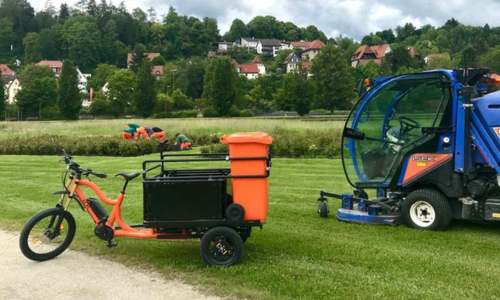
XCYC WORK im Einsatz für Gemeindedienst und Gartenpflege
Wie Platzwart Daniel Hitz den XCYC WORK täglich für Sportplatzpflege, Abfallentsorgung und Materialtransport nutzt.
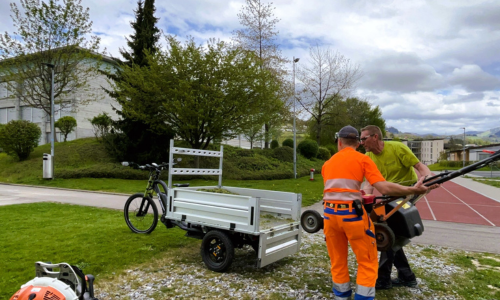
XCYC Work im Test auf dem grössten Friedhof der Schweiz
Der ausführliche Praxistest des XCYC WORK unter Dauerbelastung, auf dem grössten Friedhof der Schweiz.

What is the permissible total weight for cargo e-bikes?
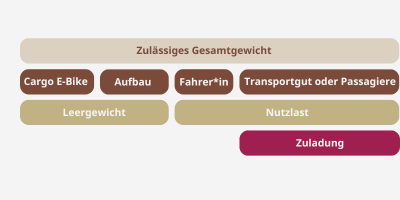
Definition and meaning
When it comes to the transport capacity of a cargo e-bike, you quickly come across the term ‘permissible gross weight’ (GVW). But what does this actually mean?
Quite simply, the permissible total weight describes the maximum weight that your cargo e-bike can carry - including the bike, rider and payload. If this limit is exceeded, it is not only riding safety that suffers, but also the technology. The frame, brakes and motor are designed for a specific load. Overloading leads to faster wear and increases the risk of accidents.
Important terms simply explained
When it comes to the workload of cargo e-bikes, terms such as tare weight, load capacity and total weight keep popping up. But what exactly do they mean - and why are they so important for safe transport?
Empty weight, workload & load capacity - What's the difference?
- Tare weight: This is the unladen weight of the bike and the body, i.e. without rider, load or accessories.
- Workload: Often confused with the load capacity, the workload describes the maximum amount your bike can carry - depending on the permissible total weight, the bike's own weight and the rider's weight.
- Load capacity: This describes the actual load - transported goods (parcels, tools or shopping) or passengers.
Weight distribution on the XCYC cargo e-bike
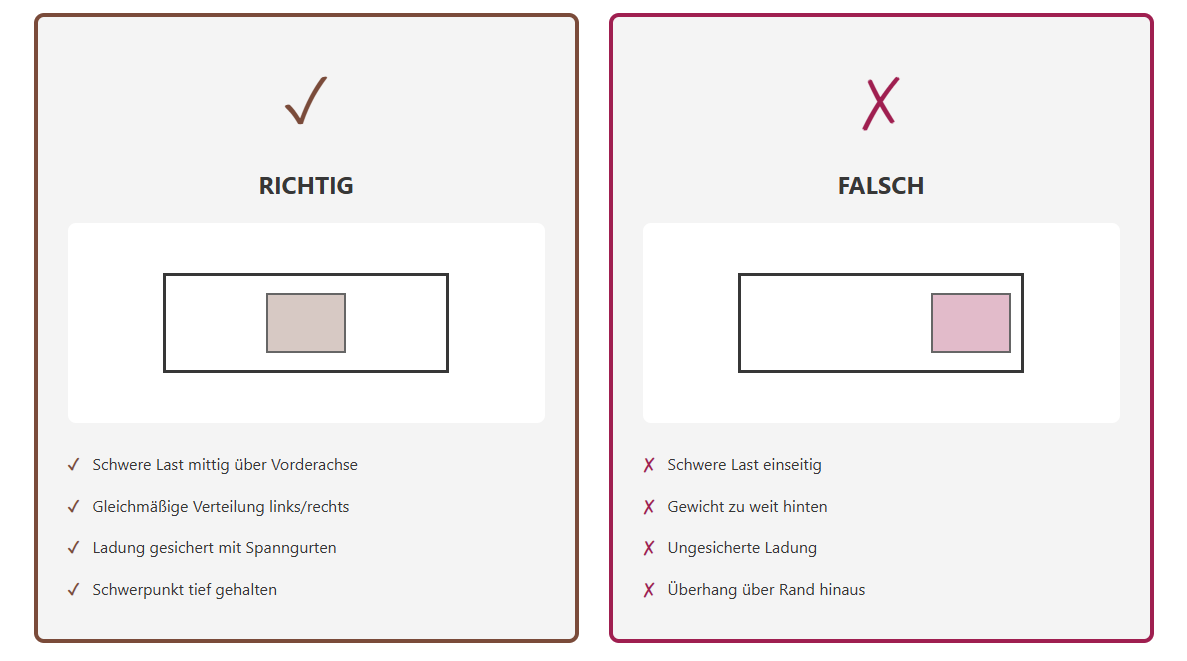
Warum ist die Nutzlast im Alltag so entscheidend?
Die Nutzlast bestimmt, ob dein Cargo E-Bike sicher, stabil und effizient unterwegs ist. Wer diese Grenze überschreitet, riskiert:
- Instabiles Fahrverhalten: Vor allem in Kurven oder bei plötzlichen Bremsmanövern.
- Längere Bremswege: Mehr Gewicht bedeutet, dass du mehr Zeit zum Anhalten brauchst.
- Technische Schäden: Reifen, Rahmen und Motor werden stärker belastet.
Besonders im gewerblichen Einsatz zählt jedes Kilo. Wer die Nutzlast im Blick behält, fährt nicht nur sicherer, sondern vermeidet auch teure Reparaturen und rechtliche Probleme – ein Punkt, der ab Juli 2025 in der Schweiz mit den neuen Gewichtsklassen noch wichtiger wird.
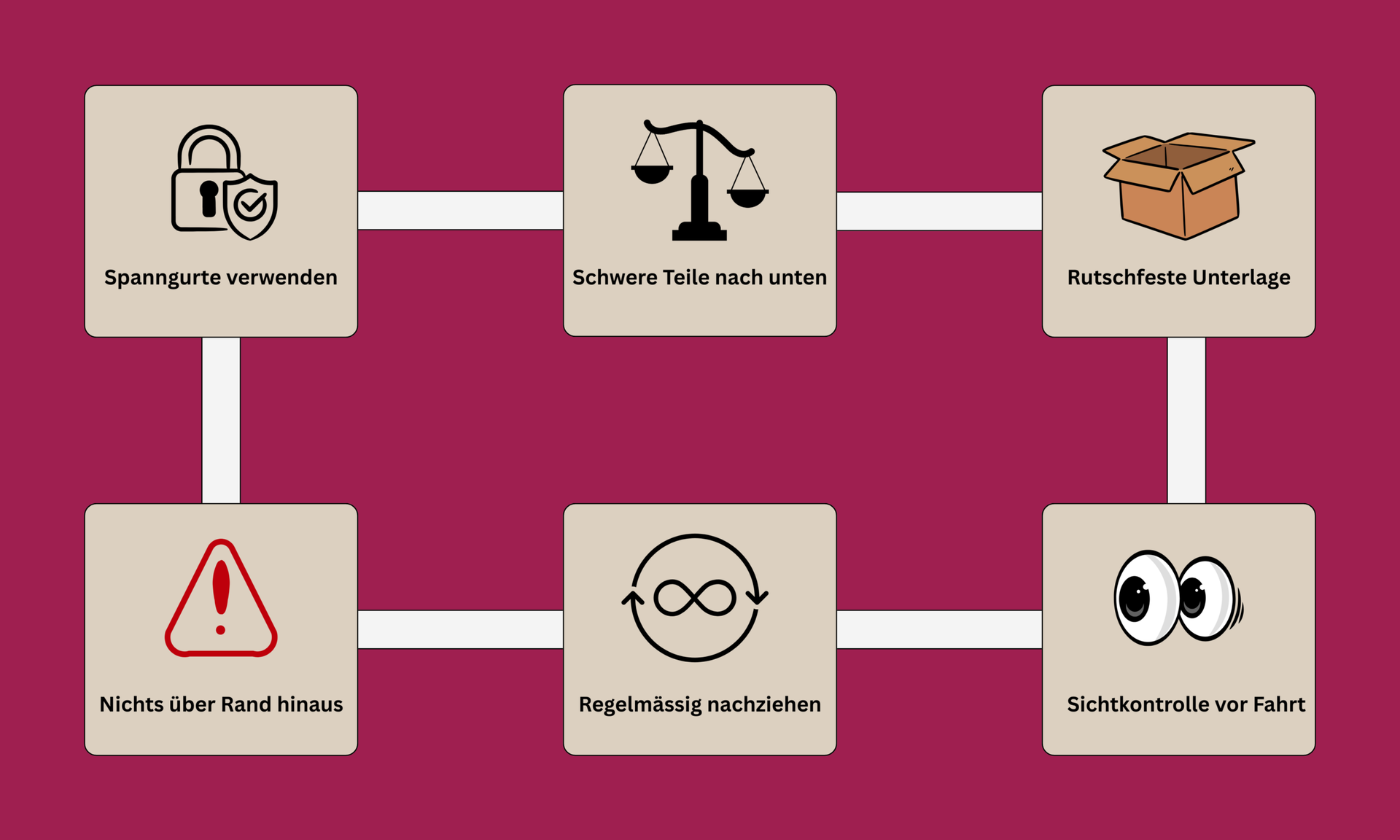
Load-securing checklist
XCYC Lastenräder im Überblick: Zulässiges Gesamtgewicht
XCYC Work
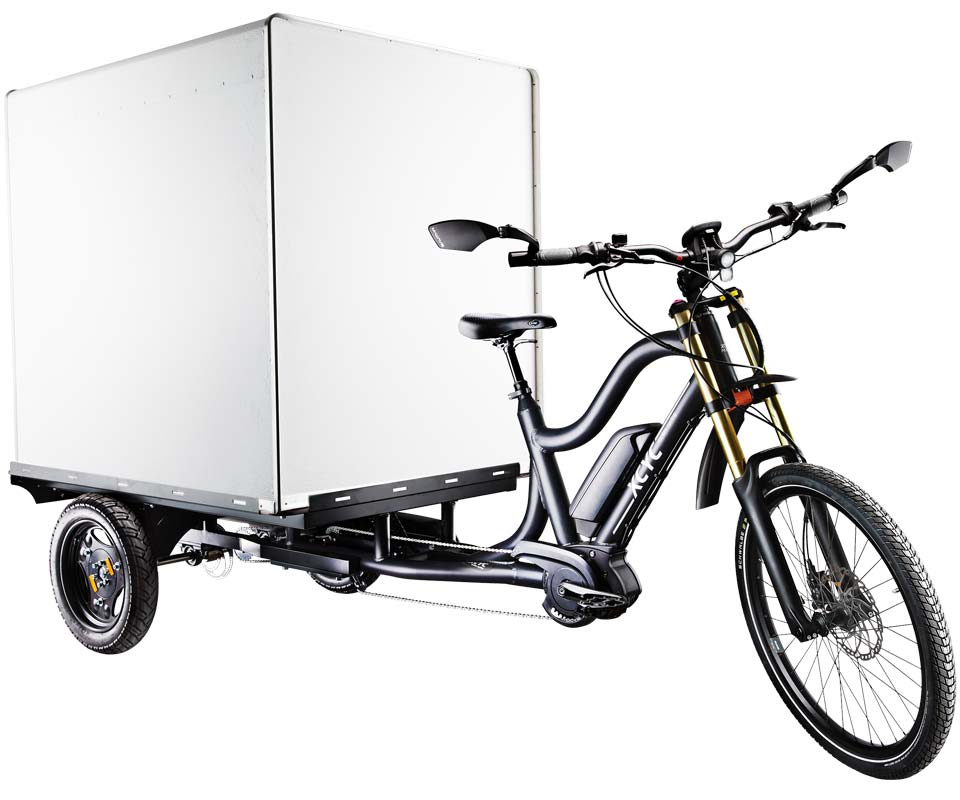
Gewicht ohne Aufbau | 100 kg |
| Permissible gross weight DE/EU | 300 kg |
| Permissible gross weight CH | 250 kg |
XCYC Allround
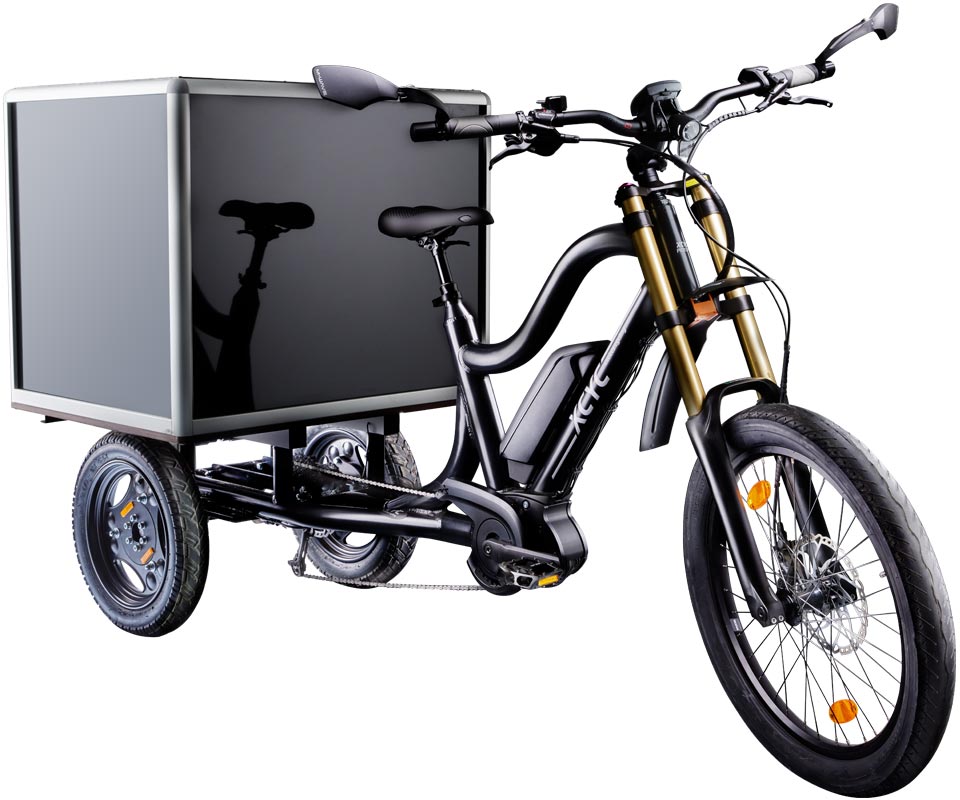
Weight without superstructure | 58 kg |
| Permissible gross weight DE/EU | 250 kg |
| Permissible gross weight CH | 250 kg |
XCYC Longtail
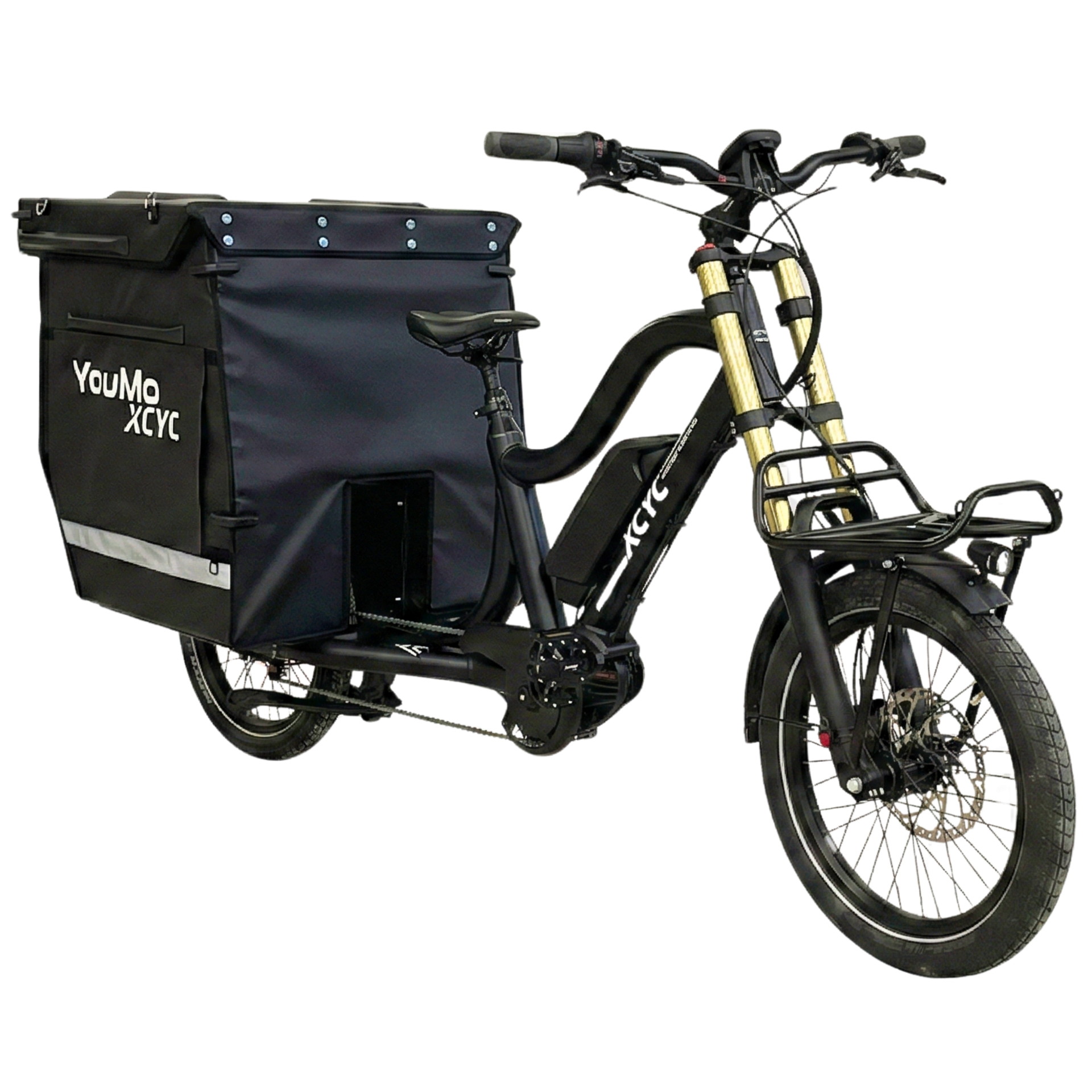
| Weight without bodywork | 50 kg |
| Permissible gross weight DE/EU | 180 kg |
| Permissible gross weight CH | 250 kg |
E-Bike Reichweite rechnen
für dein XCYC Modele
Modell wählen
Vielseitig
XCYC ALLROUND
Bosch Performance CX · 500 Wh
bis 65 kmSchwerlast · Modular
XCYC WORK
Bosch CargoLine CX · 500 Wh
bis 100 kmLieferung · Urban
XCYC LONGTAIL
Urban Delivery · abschliessbar
bis 65 kmGelände
Geschätzte Reichweite
zwischen 52 und 78 km
Minimum
52
kmTypisch
65
kmMaximum
78
kmSchätzwerte basierend auf Bosch-Herstellerangaben (Bosch Performance CX / CargoLine CX, 500 Wh). Die tatsächliche Reichweite kann je nach Fahrtstil, Aussentemperatur, Wind, Reifendruck und Beladungsart variieren.
Legal regulations & manufacturer's specifications
The payload of a Cargo E-Bike depends not only on the model but also on legal requirements.
The workload of a cargo e-bike depends not only on the model, but also on the legal requirements. While in the EU and Germany it is primarily the manufacturer's specifications that are decisive, new regulations defining clear weight classes will come into force in Switzerland from 1 July 2025.
Legal regulations on the payload of XCYC cargo e-bikes in Germany
In Germany, there is no uniform statutory limit on the payload of cargo e-bikes. The maximum permitted load for a cargo bike is specified by its manufacturer and depends on the frame, brakes and overall construction.
StVZO § 34: The permissible total mass of a vehicle must not be exceeded. Overloading can impair road safety and, in commercial use, can result in fines. Anyone who exceeds the manufacturer’s specifications also risks damage to the bicycle and loss of insurance cover.
Regulations for cargo e-bikes in Switzerland
Light motor-assisted bicycles
- No driving licence required from age 16 (or from age 14 with category M)
- Ideal for urban transport and private use
- Use of cycle paths is compulsory (where available)
Heavy motor-assisted bicycles
- Category M driving licence required
- Relaxed cycle-path rules, regulated locally
- Approved for public-road use
The legal details: e-bike regulations
Wie viel Zuladung hat ein XCYC Cargo E-Bike wirklich, fahrer eingerechnet?
The short answer: considerably less than the gross vehicle weight might suggest, because both the bike’s own weight and the rider’s weight count against the payload.
The formula for calculating the payload of an XCYC cargo e-bike
XCYC WORK
XCYC Allround
XCYC Longtail
Das perfekte XCYC Cargo E-Bike für deine Transportbedürfnisse finden
Ob für den täglichen Werkverkehr, städtische Lieferungen oder den privaten Gebrauch, das richtige Cargo E-Bike macht den Unterschied.
Die XCYC-Modelle bieten für jede Transportaufgabe die passende Lösung:
XCYC Work: Robuste Bauweise, zulässiges Gesamtgewicht bis 300 kg, hohe Nutzlast bis 115 kg.
XCYC Allround: Leicht, flexibel, zulässiges Gesamtgewicht bis 250 kg, mit bis zu 107 kg Nutzlast.
XCYC LONGTAIL: Wendig und kompakt, zulässiges Gesamtgewicht bis 180 kg, mit bis zu 45 kg Nutzlast.
XCYC cargo e-bikes in use: our areas of application
Payload plays a different role depending on the application. Here is an overview of where XCYC cargo e-bikes are used today:
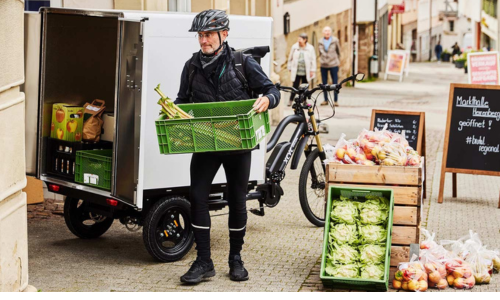
Parcel and goods delivery in densely built-up city centres, emission-free right to the door.
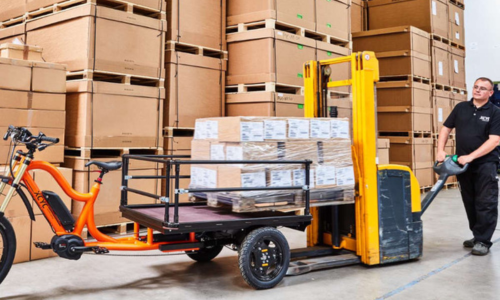
Green-space maintenance, municipal works and upkeep for municipalities and public institutions.
Internal transport on business and factory premises, between halls and storage areas.
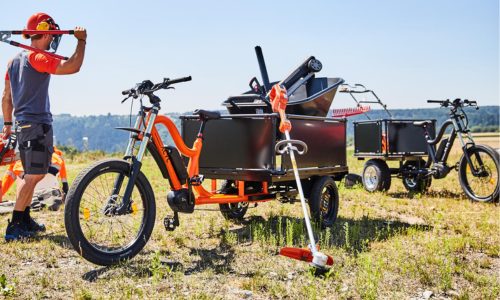
Flexible transport of materials over rough terrain and in areas used for tourism.
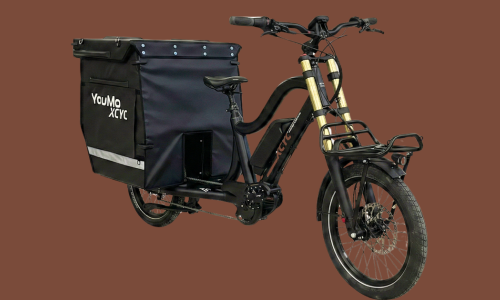
Make a no-obligation enquiry
Configuration, subsidies in your canton, and leasing—all from one source.
XCYC enquiry
Tell us what you need a cargo e-bike for and we will be happy to advise you.
Thank you, we have received your request.
We will get back to you as soon as possible. You will receive a confirmation with your ticket number by email.